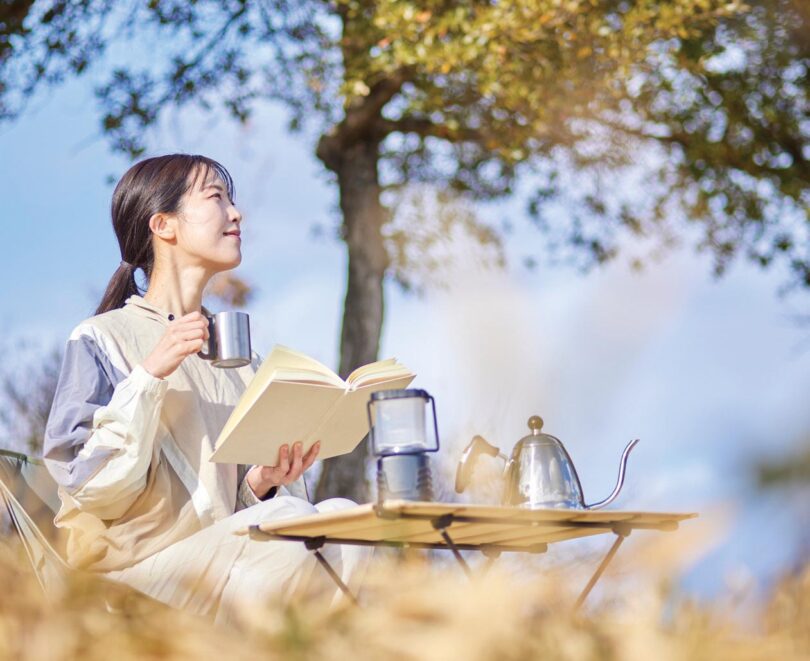
THE HEALING POWER OF NATURE
The scent of freshly cut grass is enough to transport us back to childhood. To carefree summer days when we were almost feral, sent outside to play until we were called home for dinner or the streetlights came on. The sun warmed our faces, the soles of our bare feet felt the soft earth, and thoughts of waking to an alarm for school were somewhere off in the distant future.
Now, with our grown-up eyes almost constantly fixed on screens big and small, health advocates — especially those in the mental health field — are promoting the advantages of reintroducing our toes to the ground.
Not only are children more closely monitored these days, for good reasons, but coming face to face with nature as an adult isn’t quite as happy-go-lucky as it used to be. But the benefits are just as important, especially to our mental health. We all need a break, and fortunately, you can’t scroll through a flowerbed or swipe right on a tree. Even a quick walk in a park can be relaxing and turn a bad (overworked, stressed, anxious) mood around.
What the Doctor Ordered
Humans have innately known to get outside since the dawn of time. Not that we had a choice. That’s where our food was. But now we sometimes need an MD to remind us. Physicians are actually writing prescriptions for spending time among the leaves and flowers.
Dr. Anna Gunz, a Pediatric Critical Care Physician at the Children’s Hospital, writes such prescriptions, and the reaction has been overwhelmingly positive. She says there’s a lot of proof to support nature as a healing force for our bodies. And growing evidence that it also heals our minds. After all, we are animals and fundamentally connected to the natural world.
“If you go outside, you’re helping your nervous system,” Dr. Gunz explains. “You’re helping your cardiovascular system and your mental health. It helps with depression and low moods.” It’s a reminder that even when you’re fighting to regain your health, the natural world is therapeutic in its own way. In fact, a study showed that just a glimpse of the outdoors helps with mind over matter:
“This group of people all had the same surgery. They were all in the hospital, and half of them could see a view of nature, which literally meant a tree under the window; it was a very low bar. The other half could see a wall or other buildings. The group that could see nature had less pain. They used fewer pain medications, and they ended up being discharged earlier.”
Even if circumstances mean you can’t get outside, Dr. Gunz says there are other ways to connect to nature.
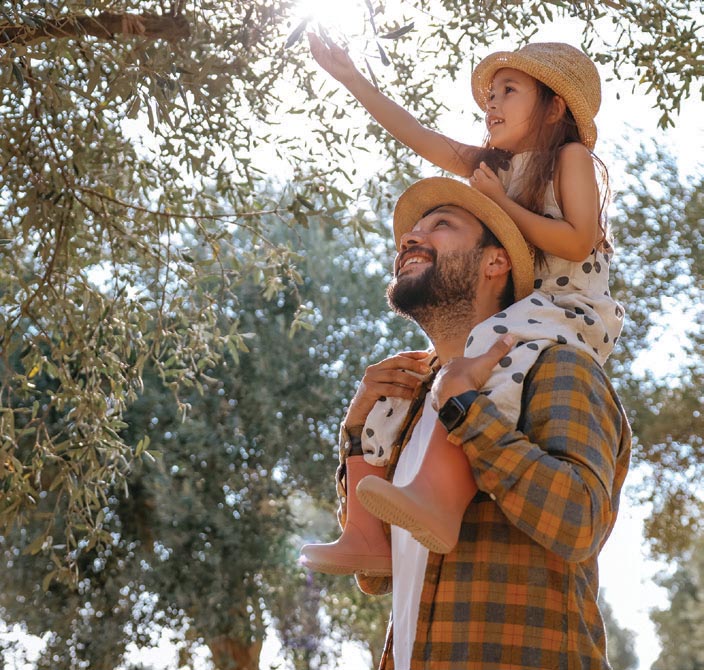
The benefits of getting out there and enjoying the bounty of nature are undeniable.
“There are times when it’s hard to go out,” Dr. Gunz says. “Maybe you’re on a deadline, or maybe you’ve got asthma, and there is extreme heat that day. Sitting with a plant indoors, taking care of a plant, even having a fake plant in a room, changes the way people feel about things.”
Plants emit oxygen and are great listeners who never interrupt when you’re telling a story. Dr. Gunz didn’t mention this specifically, but giving plants names only strengthens the bond. Consider Robert Plant for a classic rock fan, or for a film buff, Keanu Leaves. All of this interaction between flora and humans counts as intermingling with the natural world.
Everything Under the Sun
We now know that allowing our skin to bake can be dangerous. That gorgeous tan is the skin’s way of crying, “Enough!” Cells are producing melanin to protect DNA from permanent damage, and it might be a harbinger of health concerns in the future.
Skin cancer — melanoma — is one of the leading types of cancer in Canada, but it’s also one of the most survivable when it’s caught early. Applying a broad-spectrum sunscreen and wearing a hat and other protective clothing can reduce exposure without limiting outdoor fun.
The sun’s rays emit Vitamin D to help the body absorb calcium for healthy bones. If you’re spending most of your outdoor time in the shade, a Vitamin D supplement can fill the gap. (Please discuss this with your doctor first.)
Ticked Off
It seems as if ticks are everywhere. They’ve found ways to travel, like stowing away in bird feathers for a free flight across a lake. They’re sneaky, they don’t fly, and they don’t jump. Instead, they cling to tall weeds and grab on like Velcro when someone passes. Keeping grass and gardens trim and avoiding critter carriers like mice and chipmunks can reduce the chance of getting ticked.
Jeremy Hogeveen with the Middlesex-London Health Unit says ticks shouldn’t deter anyone from taking hikes or walks in the woods. But ticks will try to catch a ride, so inspecting yourself thoroughly after being out is a must.
“You don’t normally check behind your ears, on your scalp, and your armpit,” Jeremy says. “Also, your belly button and groin. That’s where the ticks end up going and, when they bite, they release an anesthetic, and you don’t even know.”
Applying a broad-spectrum sunscreen and wearing a hat and other protective clothing can reduce exposure without limiting outdoor fun.
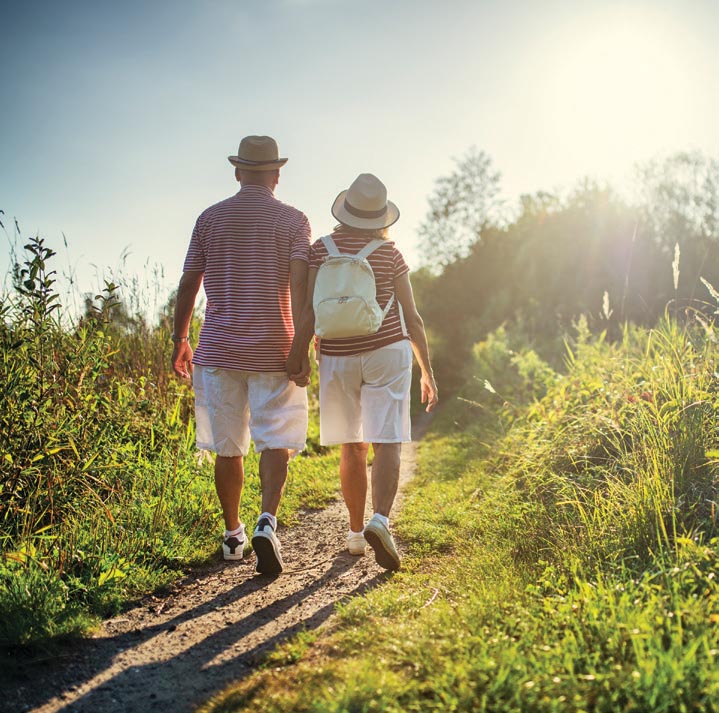
Jeremy also suggests throwing your outdoor clothing in the dryer for fifteen minutes when you get home to make sure any unwanted hitchhikers get the message.
Tweezing off a tick within 24 hours is ideal. But even the effect of a black-legged tick — the one that carries Lyme disease — can be neutralized with antibiotics after 72 hours. (That requires another conversation with a doctor.) There are also preventative measures for pets that include chewables, topical treatments and more.
“Protection methods are very easy,” he says. “And if you have a brush pile or wood pile, keep it further away from the house.”
If you want to know what kind of tick you’ve got, upload a photo of it to ETick.ca. They might even ask you to snail mail the tick so they can test it.
Garden Party
Some people need an outdoor buddy to keep them motivated. Someone to walk or cycle with and to whom they’re responsible for showing up. Finding a like-minded pal or community is also important to our well-being, as many recent studies have shown there’s a loneliness epidemic among all age groups. We need each other.
Last year, a couple of Western students conducted a study about the school’s community garden. They discovered it was offering students much more than learning about growing food.
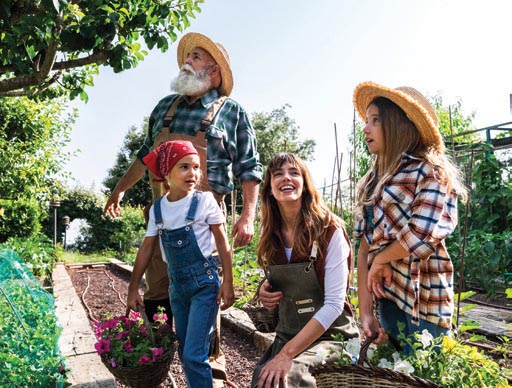
Olivia D’Andrea Brooks, one of the co-authors, says those who took the time to get involved reaped the rewards. “Overall, we found that community gardens provide a form of third place,” Brooks says, with the first two places being home and school or work. Participants built a community around tending to the garden. And for the first time, some developed an interest in other green activities.
D’Andrea Brooks’ research found there was a perceived improvement in the gardeners’ mental well-being. “They were able to experience moments of calm while getting away from everyday stressors, all in a sensory-rich environment.”
Message in a Bottle
People are getting the message that we need to stay hydrated. Everyone seems to be hanging onto a giant water bottle at all times. If it isn’t strapped to a bike or tucked into a backpack, it’s dangling on the end of a finger. And if it feels like summers are hotter than they used to be, climate data backs up that perception.
Through the 1970s and 1980s, southwestern Ontario would experience an average of 10 days of extreme heat every year. Now, that’s up to 14 days. And that’s just the heat. What about the humidity? Some experts predict that by the year 2050, hot and humid days will become the norm. You might need a bigger water bottle. But it’s not an excuse to become a recluse.
Walking on Sunshine
Sure, we need more preparation before heading out than we used to, but it’s a small price to pay. We’re so fortunate to have easy access to the bounty of nature. And as Dr. Gunz reminds us, the benefits of getting out there and enjoying it are undeniable.
“When you start looking at the evidence, it’s mind-blowing,” says Dr. Gunz. “If you’ve had a hard day, go outside, take five breaths before you walk into your family. Wear sunscreen, wear a hat, and go out when you can see that the air quality is better. It’s absolutely powerful.” •
LISA BRANDT is a freelance writer, voice-over professional, podcaster and author of five books. You can find her at voiceoflisabrandt.com. She lives in Port Stanley with her husband and their supervisor, a senior cat named Cuddles.