T.G. Haile — TG’s Addis Ababa Restaurant

Yam Gurang — Momos at the Market

Maryam and Malvin Wright — Yaya’s Café at Museum London
Culinary Observations
Fifty years in commercial kitchens strips away the romance of food, leaving behind the exhausting reality of hard labour. My five decades in the culinary world include launching six restaurants—including La Cucina on King, Blackfriars Bistro and Murano; founding Forest City Culinary Experiences and Blackfriars Emporio; writing for the London Free Press, Eatdrink and Lifestyle magazines; and 15 years working with regional tourism boards. I’ve grown to believe that we tend to sanitize local history, flattening a community’s authentic culture into digestible, corporate-friendly packages for consumption by outsiders.
Today, the digital creator economy lacks integrity. Modern food media is a manufactured parade of meaningless superlatives, where every neighbourhood bistro is falsely labelled “transcendent.” When praise is ubiquitous, it becomes worthless. This superficiality points to a deeper systemic issue: our culinary narrative is controlled by an affluent, Western lens. This privilege is weaponized through lazy, algorithm-driven listicles. Compiled by untrained foodies who lack historical and technical literacy, these checklists tokenize non-Western cuisines, reducing complex culinary traditions and cultural heritage to tokenistic checklists.
This environment perpetuates structural inequality and cultural appropriation, where the cultural capital of minority and immigrant communities is extracted and monetized by the dominant culture. This colonial gaze is maintained through the outdated term “ethnic” and a punitive pricing double standard. Western food culture demands that Mexican, Indian, African and Asian cuisines remain inexpensive to be deemed “authentic,” while granting premium pricing to Western classical techniques without question.
When we look closely at Canadian cuisine, we see that it is not a monolithic entity, but a wide-ranging, often messy mosaic of adapted Indigenous traditions and immigrant histories. Despite media inertia, the actual culinary landscape of Southwestern Ontario has long been dragged forward by true trailblazers who refused to let their heritage be suppressed. These real food champions are not creations of an algorithm; they are cultural anchors whose impact cannot be summarized in a shallow, substance-free listicle or validated by an automated corporate badge.
For over two decades on Dundas Street, pioneers like the family at TG’s Addis Ababa Restaurant have used their dining room as an educational space, offering a masterclass in hospitality and introducing the city to the profound, communal ritual of the Ethiopian coffee ceremony and shared injera platters. In that same spirit of uncompromising authenticity, Pupuseria Rosa’s Latin Food has spent years elevating the Salvadoran pupusa from a misunderstood, cheap, quick bite into a celebrated regional staple, proving that heritage corn dough and slow-stewed fillings carry a culinary weight that cannot be measured by a discount price tag.
This deep culinary resilience anchors the neighbourhood, moving further down the road to So Inviting on Dundas Street, where the simple act of wrapping handmade dumplings and warm pork buns serves as an intimate daily masterclass in community building and radical hospitality. A short walk away at The Market at Western Fair District, Chef Yam Gurung has spent nearly two decades hand-pinching Nepalese dumplings at Momos at the Market, handcrafting local casings and traditional tomato-coriander sauces that demand the same respect as any high-end Western reduction.
More recently, spaces like Maryam and Malvin Wright’s Yaya’s Café at Museum London have completely upended expectations, serving an Afro-forward narrative through ancient and modern techniques rooted in the Sahel and the Caribbean. These are not mere ethnic eateries to be ticked off on a superficial checklist; they are sophisticated, story-rich institutions whose decades of labour have fundamentally written London’s true cultural identity.
We still have a long way to go. If we are to dismantle the colonial power dynamics that underpin modern food media, we must actively unsubscribe from the narratives of privileged tastemakers. We must embolden a truly inclusive media landscape that reflects the reality of our communities, where the BIPOC population represents more than a quarter of the Canadian demographic, and where diners of every background demand equity, accountability and depth. Until we change who holds the pen, our food writing will remain an exercise in airbrushing, leaving us with a culinary culture that is plenty palatable but entirely hollow.


Bryan’s Tasting Notes
A Recommendation Well Taken — Byrne Eats
My expectations were sky-high before I even set foot inside Byrne Eats, conveniently located across from the Western Fair Market in London’s vibrant Old East Village. When two of London’s most respected culinary insiders tell you a place is a must-visit, you listen.
The first tip came from Chef Brian Sua-an. He is the brilliant culinary mind behind the celebrated Reverie Restaurant and Saisha’s Patisserie. The second endorsement came from Russell Williams. Russell is a local hospitality veteran who refined his craft as a mixologist at ANNDining and as a server at Sagi of Wortley. Demonstrating his deep commitment to our local food scene, Russell recently purchased J-Dee’s Market Grill, where he plans to launch a cocktail-focused tapas restaurant.
With recommendations from a top-tier chef and a visionary new restaurateur, I knew I was in for something special. Byrne Eats absolutely delivered on that promise, offering an exceptional dining experience that perfectly bridges authentic flavour with polished execution. The menu beautifully highlights why local food industry pros are paying attention, serving up elevated takes on classic Filipino street food. We started the meal with Pork Spring Rolls—tightly rolled, glistening golden cigars jam-packed with seasoned filling that offer an incredibly satisfying crunch—along with bao buns, spectacular with their pillowy texture and perfectly balanced fillings, and Sizzling Pork Sisig, a master class in texture and punchy flavour featuring crispy fried pork belly tossed with onions and chillies, finished with a bright squeeze of fresh calamansi.
For the mains, the Chicken Inasal stole the show. Marinated to perfection and grilled beautifully, this classic dish comes paired with a fried egg, garlic rice and house-made pickled papaya salad. The sweet side of the menu is equally impressive.
We finished the night with the Mango Sticky Rice, rich, sweet and perfectly executed. There is also Halo-Halo on the dessert menu, offering a vibrant, refreshing option for those looking for a beautifully layered sweet treat.
Ultimately, the kitchen showcases the exact precision and balance that a chef like Brian Sua-an would appreciate. At the same time, the front-of-house dynamic reflects the seamless, attentive service standards that Russell Williams championed throughout his career. Every detail feels deliberate, curated and deeply respectful of these traditional street food staples. Byrne Eats is a spectacular and essential addition to the local dining landscape. fb.com/byrneats
A Sinaloa Fiesta — La Calaka
There is a distinct, unhurried rhythm to the way a family-run kitchen operates, creating an unspoken choreography that corporate restaurants can never quite replicate. At La Calaka, a fresh addition to downtown London’s culinary landscape, this spirit is palpable the moment you cross the threshold. Run by a husband-and-wife duo from the coastal city of Mazatlán, this Dundas Street cantina is a refreshing antidote to trendy, detached spots that price out locals, aestheticize the culture, and dilute traditional recipes. Instead, it serves as an authentic love letter to the bold, sun-drenched flavours of Sinaloa.
The restaurant’s name provides an immediate clue to its spirited, unpretentious ethos. In Mexican folklore, la calaka is a colloquial, affectionate term for the skeleton. Far from a macabre symbol of mourning, these figures are celebrated during Día de los Muertos as a joyful reminder to embrace the sweetness of life rather than fear its end.
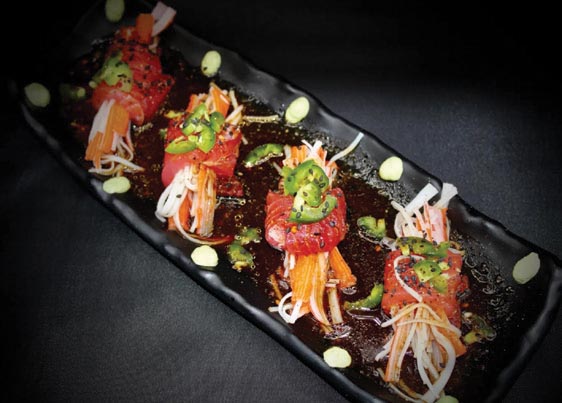


The ritual begins with a basket of flour chicharrónes that arrive puffed and crisp alongside a pair of house-made salsas. There is a mild, bright green version made from tomatillo and jalapeño, and a fiery red counterpart that commands immediate respect. Together, they set a vibrant baseline for the meal ahead, mapping out the kitchen’s impressive range. The menu shifts seamlessly from traditional street classics to inventive coastal anomalies, exemplified by “The Bomb,” an audacious house specialty that initially reads as a cultural paradox. Opting for the shrimp variation reveals a brilliant manifestation of sushi Sinaloense. It arrives as a beautifully executed, breaded rice roll tightly packed with cream cheese, avocado and crisp cucumber, a creation reminiscent of a deeply decadent Italian arancini. A masterclass in textural contrast, it marries a hot, shatteringly crisp exterior with a cool, velvety core, challenging preconceptions by fusing Japanese technique with Mexican soul.
When the meal transitions to the tacos, the kitchen showcases its mastery of foundational street food, elevated through precise execution. The chicken tacos arrive generously portioned, featuring tender, impeccably seasoned meat that transforms a humble staple into something memorable. Yet, it is the birria tacos that linger longest in memory. The shredded beef is rendered to melt-in-your-mouth tenderness, encased in corn tortillas crisped to a perfect amber hue. Served alongside a rich, complex consomé for dipping, each bite demands full attention. The depth of flavour in the broth speaks to hours of patient simmering, a testament to the kitchen’s uncompromising dedication.


Ultimately, by anchoring its menu around the specific maritime traditions of its hometown, this family has created something remarkably distinct. La Calaka represents a vital breath of fresh air for the local food scene. It rewards curiosity, leaving diners eager to return to explore the deeper corners of the menu, whether that means diving into their vibrant, citrus-cured aguachiles or exploring the rest of their singular Mexican-style sushi rolls. lacalaka.net
A Grecian Love Letter — Meraki Greek Kouzina
At Meraki Greek Kouzina, the ghosts of old-school fine dining have been quietly exorcised. The restaurant occupies a handsomely reimagined downtown landmark that once housed Michael’s On The Thames, a local institution of a different era. Today, brothers Iasonas and Thodoris Fragiskatos manage the transition with remarkable grace. The name is borrowed from the Greek shorthand for infusing one’s labour with soul; in practice, the room operates as a love letter to the culinary traditions of Kefalonia. The kitchen deftly navigates the gulf between the rustic, salt-crusted comfort of an island tavern and the manicured precision of upscale Mediterranean dining.
Architecturally, the room acts as an accomplice to this hospitality. Bathed in natural light from a scenic sunroom and expansive windows overlooking the river, the space feels both contemporary and deeply comforting. It serves as an ideal theatre for exploring an uncommonly deep cellar of imported Greek wines, specifically curated for the dry, high-acidity profiles that cut cleanly through olive oil. Under the watchful eye of a seasoned staff, the service operates with a quiet, almost collegiate authority.
Appetizers arrive with architectural ambition. The Meraki Special features paper-thin ribbons of zucchini and eggplant, fried to a delicate snap and playfully stacked like a Jenga tower over a reservoir of cool, garlic-kissed house tzatziki. Nearby, a plate of calamari displays an equally deft hand, proving tender, cleanly seasoned and entirely free of the rubbery, tire-tread pitfalls common to lesser establishments.
The menu then takes a scenic, elegant detour into pasta. Comfort is engineered through dishes like the lamb pappardelle, where wide ribbons of pasta are tossed with slow-braised meat, aromatic herbs and a shadow of red wine, all snowed under a generous grating of aged Vlahotiri cheese. The marine options are similarly transportive, including an orzo reduction simmered to a rich concentration with mussels, calamari and sweet shrimp, alongside a plate of lobster ravioli bathed in a gently spiced champagne cream that stops just short of over-indulgence.
For the traditionalist, the roasts are exercises in patience. The kleftiko arrives meticulously marinated and baked into submission alongside potatoes, carrots and a sharp hit of feta. The kotsi, a slow-braised lamb shank, offers an essay in fall-off-the-bone tenderness that is meant to be savoured slowly.
But the kitchen’s most uncompromising statement is the Bakaliaros Skordalia. Salted cod paired with a garlic-and-potato purée, wild greens and a sharp lemon-oil dressing presents a beautifully orchestrated collision of elements. It is a composition of oceanic salinity, velvet starch, a sharp slap of red wine vinegar and an ungodly volume of raw, pulverized garlic. The skordalia here is less of a condiment and more of an absolute garlic bomb. It is so potent, smooth and uncompromisingly delicious that it functions as a highly effective piece of folklore—the sort of recipe that would win the enthusiastic endorsement of Abraham Van Helsing. merakigreekkouzina.com

Cultivating Cooperation in Middlesex County
The momentum for transforming local agriculture is building through direct community engagement. A recent conversation with Jeff Pastorius and Vinicio Di Iorio at the Meet the Growers event, hosted at The Grove and sponsored by Growing Chefs! Ontario and Londonlicious underscored the deep local enthusiasm for this initiative. Events like these highlight how connecting people over food can spark the vital peer-driven relationships needed to change how we manage our shared resources.
This grassroots transformation is part of a larger effort to address a pressing national challenge. For generations, Canadian agriculture has anchored our economy. Modernization made food affordable, but it also imposed steep social and environmental costs. Healing the land requires a new approach rooted in collective action. Because every farm features distinct soil and microclimates, sustainable solutions cannot be dictated from afar. They must be co-developed by the farmers who know the land best.

Historically, our agricultural sector has operated in isolation. Livestock producers, grain growers and vegetable farmers work in separate silos, rarely sharing resources or insights. This fragmentation, combined with a lack of standardized regenerative protocols, leaves producers navigating the ecological transition alone. Breaking down these walls allows neighbouring farms to pool their wisdom, boost economic performance and restore local ecosystems
The Collective Action Program for Regenerative Agriculture (CAP) bridges these gaps. Operating at the county level, this inclusive community of practice hosts curated workshops and social gatherings led by local facilitators. Participants study the history of their region, assess its current state and co-create practical solutions. This peer-driven model creates a system for co-managing resources, establishing a scalable blueprint that will expand to other regions through university and industry partners.
This vital work relies on a powerful, interdisciplinary team. Day-to-day operations are managed by Program Manager Jeff Pastorius. Developed with the Ontario Soil Network and the Transition Accelerator, and backed by partners like the Ecological Farmers Association of Ontario, this coalition is actively transforming the fields of Middlesex County.
BRYAN LAVERY is a writer, chef and culinary entrepreneur. He operates Forest City Culinary Experiences. His career is defined by a deep commitment to the farm-to-table movement and to telling authentic stories of Ontario’s culinary landscape. He can be reached at ethicalgourmet@yahoo.com. For more culinary dispatches and essays, visit his Substack: bryanparkerlavery.substack.com.