Tariffs, EV Mandates and Consumer Uncertainty
Southwestern Ontario’s automotive market is navigating one of its most complex periods in decades. Headlines about Canada-U.S. trade tensions, tariffs, paused EV mandates and shifting incentive programs dominate the conversation. Fluctuating interest rates and inflation add to consumer anxiety.
For buyers, perhaps the car lot feels less like a place of excitement and more like a financial chessboard. For dealers, it is about balancing inventory, educating customers, and adapting to a rapidly changing landscape. Here’s a look at where the marketplace has landed.
Uncertainty Shapes Buying Behaviour
Economic uncertainty is the defining theme of today’s car market. Consumers are increasingly cautious, delaying purchases or opting for shorter commitments. “The car business is like the ups and downs of the stock market,” says Paul Jennery, General Manager of Acura West. “The market hates uncertainty, and that uncertainty plays into people’s buying patterns. A car is your second-highest purchase after your home, and that uncertainty makes people sit on their hands to an extent.”
This caution is amplified by rising prices across the board. With the cost of groceries, housing and utilities all climbing, the appetite for discretionary spending has cooled. Jennery observes, “If people don’t need a car, there isn’t that frothy excitement. Everything is so expensive now, not only automotive but groceries. You hear of the heat-or-eat debate. People are reluctant to spend a lot of money.” As a result, he notes, leasing has surged in popularity with about 70 percent of their business now coming from leasing, as it helps customers keep the cost within their budget.
Karen Adams, Service Manager at Subaru of London, sees similar trends. “Price sensitivity has increased over the past year, and many buyers are comparing financing and lease options more carefully than before. Leasing in particular has grown in popularity because it offers lower monthly payments and less long-term commitment.”
Tariffs and Trade Tensions
Earlier this year, the U.S. imposed 25 percent tariffs on Canadian-built vehicles and parts, prompting Canada to respond with counter-tariffs. While fears of dramatic price hikes circulated widely, the actual impact has been more modest.
“Once Trump got in, there was an enormous pull forward as people raced to get in under the wire, assuming tariffs would increase prices,” Jennery explains. “As it turns out, that was not the case. All our vehicles are made in Ohio, and Honda (which owns Acura) moves cars back and forth across the border all the time. Year over year, prices have gone up about one thousand dollars — not substantial.”
Still, the psychological effect of these headlines has been significant. Buyers wonder if they should hold onto their current vehicles longer, and showroom traffic from new customers has slowed. “There’s always the consumer, the one percent, where this doesn’t matter,” Jennery adds, “but the vast majority of us are concerned.”
Trade tensions have also disrupted availability for certain models. Adams notes, “We’ve experienced some disruptions with vehicle availability. Although most of our lineup is manufactured in Japan, the Subaru Ascent, Forester Wilderness and Crosstrek Wilderness, built in the U.S., have been removed from our lineup for the foreseeable future.”
EV Mandate: A Strategic Reset
Canada’s original plan called for 20 percent zero-emission vehicle sales by 2026, ramping to 100 percent by 2035. In September the 2026 mandate was paused, citing tariff pressures and industry pushback, providing temporary relief for dealers and consumers alike. With the pause, customers now have more time to evaluate options without feeling pressured.
Chris Pinelli, General Manager of Lexus of London, sees the pause as validation of a more balanced approach. “The pause in the federal EV mandate has reinforced what we’ve believed all along: customers deserve choice, and the industry needs a realistic transition timeline. For now, we can focus on hybrids and plug-in hybrids and properly educate consumers on Battery Electric Vehicles (BEVs), so they get the right solution when they’re ready.”
Adams agrees. “Some customers who were previously motivated by the sense of an approaching deadline are now taking more time to evaluate their options and the financial aspect of it.”
Manufacturers, however, are still investing heavily in EV development, and new models are on the horizon. Acura’s first full EV, the RXS, launches next June. Jennery calls it a “game changer” but adds, “Two things need to happen for EVs to truly take off: a 1,000 km range and a price around $40 to $50,000. That gets you to Toronto, Windsor or Muskoka without anxiety. Right now, you won’t drop $70,000 for a limited range.”
Affordability and Flexibility Take Center Stage
Rising interest rates have made monthly payments a critical factor in decision-making. Pinelli suggests that the hybrid lineup continues to be one of the strongest points of interest in the showroom as it gives the flexibility to choose what suits your lifestyle, budget and driving habits. And, Adams explains, “while fuel efficiency remains important, for EV shoppers, range and charging convenience are still the deciding factors.”
Used vehicles have become another focal point. With new car prices climbing, demand for quality pre-owned models has intensified. “Scarcity is the situation,” Jennery says. “It’s hard to keep more than five or six used vehicles on our lot. A good four- or five-year-old car is very desirable.”
EV Sentiments
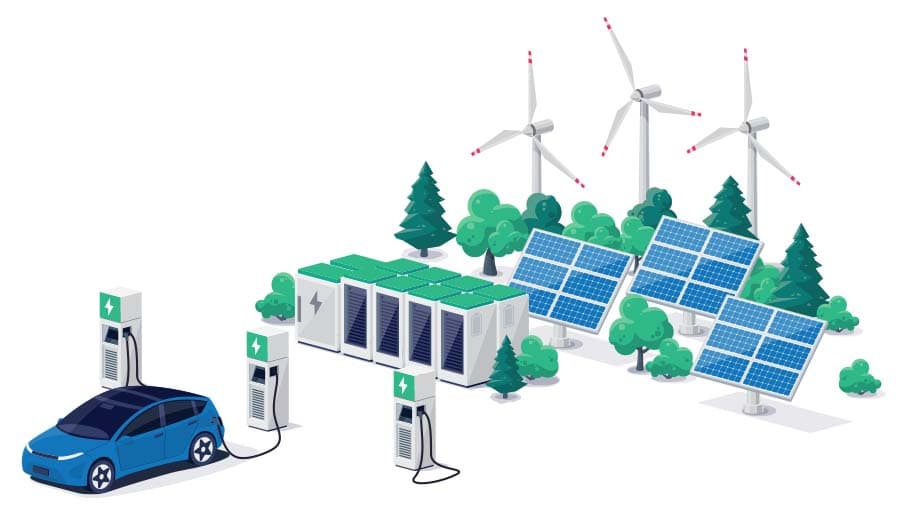
Consumer attitudes toward EVs can best be described as “curious but cautious.” Adams observes, there is genuine excitement about new technology and the promise of lower operating costs, but practical concerns about range, charging access, battery life and resale value are top-of-mind questions. Cold weather performance and home charger installation are also frequent topics.
Pinelli sees a similar split. “Techforward buyers and young professionals are excited to upgrade, but many remain hesitant because of the unknown.” That, he argues, “makes Lexus hybrid the safe entry-level electric offer.”
Hybrid and plug-in hybrid vehicles offer electric capability for short trips while retaining gasoline engines for longer journeys, reducing range anxiety and infrastructure dependence. For manufacturers and dealers, this multi-pathway approach is proving essential during the transition years. Jennery sums it up: “You can’t incentivize it enough to make it viable yet. There’s still range anxiety and a high price. Get the range right, and anxiety disappears, then it’s just about price.”
Pricing Pressures and Global Competition
While tariffs have had a limited direct impact on pricing so far, global competition looms large. Chinese automakers are producing high-quality EVs at significantly lower costs thanks to their government subsidies, Jennery points out. But they aren’t coming to North America anytime soon. Tariffs are in place for a reason, he says, as without safeguards the influx of low-cost imports could disrupt the industry, making tariffs a contentious but strategic necessity.
Dealer Strategies in a Volatile Market
Dealers across the region are adapting to this environment with a mix of short-term tactics and long-term planning. Key strategies include:
• Expanding leasing programs to keep monthly payments manageable.
• Prioritizing hybrid models as a practical bridge to full electrification.
• Investing in consumer education to demystify EV technology and clarify incentive programs.
• Managing inventory carefully to balance the scarcity of used vehicles with growing demand for hybrids.
Pinelli emphasizes clarity. “We spend a lot of time helping guests understand what they do and don’t qualify for.” Adams adds, “Clear, up-to-date information has become essential during the sales process, especially for first-time EV buyers.”
Looking Ahead: What Should Buyers Do?
For consumers in Southwestern Ontario, the key to navigating this market is flexibility and planning. Practical steps include:
• Explore hybrid options as a transitional solution that balances efficiency and convenience.
• Consider leasing to reduce financial risk and maintain flexibility.
• Stay informed about incentive programs, which can change quickly.
• Plan for at-home and roadside charging infrastructure if moving toward a battery-electric vehicle.
• Look for high-quality used cars that have been traded in on expired leases.
Conclusion
Southwestern Ontario’s car market reflects a global story: uncertainty breeds caution. Tariffs, paused mandates and economic stress have slowed the pace of change, but not the direction. EVs are coming, just later and more gradually than originally planned. In the meantime, hybrids, leasing and informed decision-making are the tools buyers need to navigate this complex environment.
As Jennery puts it, “Everyone is wondering what’s coming next. Maybe I should hang onto my car? That’s the mood. But for those ready to buy, there’s still great value, if you know where to look.”
BRUCE FYFE is a researcher, writer and retired librarian who enjoys spending spare time exploring the back roads.